
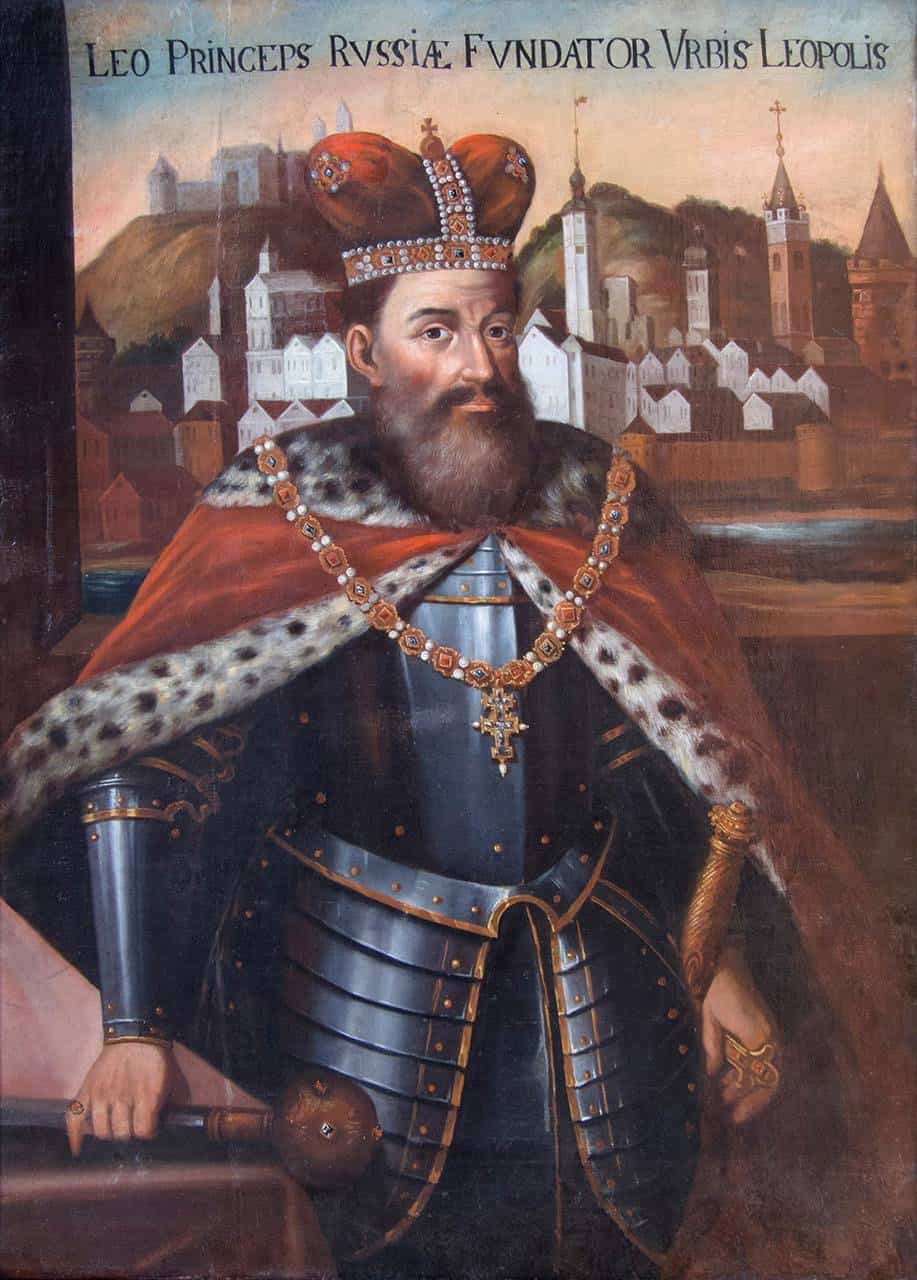
- Діяльність: Державна політика
- Дата народження: близько 1228 року
- Дата смерті: близько 1301 року
- Навігатор: Пізнє середньовіччя. Русь після Русі
Лев Данилович або Лев Галицький — князь перемиський, белзький і галицький. Представник роду Романовичів, гілки Володимирських Мономаховичів, із династії Рюриковичів. Син Данила Галицького і Анни Мстиславни. Чоловік угорської принцеси Констанції, доньки угорського короля Бели IV.
Народився близько 1228 року, помер близько 1301 року. Князь Перемиський, Белзький і Галицький. Він був другим спадкоємцем короля Русі Данила, народженим у шлюбі з князівною Анною Мстиславівною.
У різні роки Лев правив у Перемишлі, Белзі, Холмі, Галичі. Після смерті батька став сюзереном держави Романовичів: «Лев князь, син короля Данила». Столицею князя Лева було місто Львів, засноване в 1240-х роках і назване на честь свого покровителя.
У вересні 1246 року Лев одружився з Констанцією, донькою короля Угорщини Бели IV, — це був перший в історії шлюб доньки правлячого короля з представником руської вінценосної родини. У шлюбі народилося щонайменше троє дітей, зокрема «король Русі і князь Володимира» Юрій І — так він титулувався на єдиній уцілілій великій маєстатичній печатці.
Уперше Лев Данилович узяв участь у битві 17 серпня 1245 року, коли під стінами Ярослава армія Романовичів завдала поразки угорсько-польсько-галицьким силам на чолі з угорським баном Філею і кузеном Лева князем Ростиславом Михайловичем. Географія його бойової слави не набагато менша: на півночі вона сягала литовсько-ятвязьких теренів, на заході — Сілезії і Моравії, на півдні — Болохівської землі (сучасне Поділля). Разом із королем Чехії Вацлавом ІІ під кінець ХІІІ століття Лев брав участь у поділі володінь польських П’ястів, взявши під контроль Люблінську землю. Левові доводилося рахуватися з монгольським впливом. Високий рівень його авторитету, зокрема за межами батьківщини, частково забезпечувався монгольським протекторатом, тож Лев періодично або просив допомоги монголів для своїх виправ, або брав участь у їхніх походах до країн Європи, або почасти надавав для цього необхідний ресурс. Заплямував своє ім’я, у квітні 1267 вбивши у Володимирі литовського князя Войшелка.
Місце смерті Лева Даниловича невідоме. Імовірно, він прийняв чернечий постриг, помер і похований у одному із монастирів своєї держави.
Автор: Мирослав Волощук
Lev Danylovych
Activity: State politics
Date of birth: circa 1228
Date of death: circa 1301
Navigator: Late Middle Ages. Rus’ after Rus’
Lev Danylovych, also known as Lev of Halych, was Prince of Peremyshl, Belz, and Halych. He was a representative of the Romanovych lineage, a branch of the Volhynian Monomakhovychs of the Rurik dynasty. He was the son of King Danylo of Rus’ and Anna Mstyslavna, and the husband of the Hungarian princess Constance, daughter of King Béla IV of Hungary.
He was born around 1228 and died around 1301. Lev was the second heir of King Danylo of Rus’, born in his marriage to Princess Anna Mstyslavna.
At different times, Lev ruled in Peremyshl, Belz, Kholm, and Halych. After his father’s death, he became the suzerain of the Romanovych state: “Lev, prince, son of King Danylo.” His capital was the city of Lviv, founded in the 1240s and named in his honor.
In September 1246, Lev married Constance, daughter of King Béla IV of Hungary—this was the first recorded marriage between a daughter of a reigning king and a representative of the Ruthenian royal dynasty. The couple had at least three children, including Yurii I, who styled himself “King of Rus’ and Prince of Volodymyr,” as evidenced by the only surviving great majestic seal.
Lev Danylovych first took part in battle on August 17, 1245, when near the walls of Yaroslav, the Romanovych army defeated Hungarian-Polish-Halychian forces led by the Hungarian ban Filia and Lev’s cousin, Prince Rostyslav Mykhailovych. The geography of his military campaigns was extensive: to the north it reached the Lithuanian-Yotvingian lands, to the west Silesia and Moravia, and to the south the Bolokhiv Land (modern Podillia). Together with King Wenceslaus II of Bohemia, at the end of the 13th century, Lev took part in the division of the lands of the Polish Piasts, gaining control over the Lublin region.
Lev had to reckon with Mongol influence. His high level of authority, including beyond his homeland, was partly secured by Mongol overlordship. Accordingly, he periodically either sought Mongol assistance for his campaigns, participated in their expeditions into European lands, or provided resources for such campaigns. However, he tarnished his reputation in April 1267 by killing the Lithuanian prince Vaišvilkas in Volodymyr.
The place of Lev Danylovych’s death is unknown. It is likely that he took monastic vows and died and was buried in one of the monasteries of his realm.
Author: Myroslav Voloshchuk

Пов’язані матеріали


Сови короля Данила
335 грн
Докладніше
Українські скарби
415 грн
Докладніше