


- Діяльність: Державна діяльність, Наука й освіта
- Дата народження: 14 червня 1891 року
- Дата смерті: не раніше 28 червня 1941 року
- Навігатор: Світові війни
Педагог, хімік, письменник, співзасновник «Пласту», «батько» військової авіації Української галицької армії
Петро Франко, молодший син Івана Франка, був педагогом, військовим, льотчиком, хіміком, письменником: співзасновником «Пласту», «батьком» військової авіації Української галицької армії, автором 36 винаходів у галузі хімії (пов’язаних зі збільшенням терміну зберігання молока) та кількох книг, які мали своїх читачів і шанувальників.
Від спорту до «Пласту»
Петро Франко народився 28 червня 1890 року в Нагуєвичах під Дрогобичем. Змалку був шибайголовою, із 12 років уже сам вибирався в мандри Карпатами, дуже любив їздити з батьком на рибу, захоплювався полюванням. Полюбляв екстремальні випробування. Мати часто застерігала в листах: «Пильнуйте за Петром, бо він же лазить по печерах, а то бездонна пропасть».

Іван та Ольга Франки виховували дітей (а їх у родині було четверо) у майже спартанських умовах, змалечку привчаючи до селянської роботи. Ольга Франко у серпні 1904 року в листі до чоловіка повідомляла з Підгірців: «Діти могли би похвалитися умінням і працею. Гандзя уміє жати і їхати верхи на коні. Петрусь навчився плавати… Андрусь і Тарас возять снопи, косять сіно від рана до вечора».
Любов до природи й екстриму вилилась у Петра Франка в серйозне захоплення спортом. Навчаючись у Львівській політехніці, він грав у футбольній команді «Україна», любив судити матчі, організовував спортивні товариства «Луґ», був членом «Сокола-батька», а пізніше здав іспит на право викладати руханку у гімназіях. Тоді ідеї фізичного вдосконалення були дуже популярними серед молоді, передусім завдяки праці теоретика і практика української національної фізичної культури, організатора сокільсько-січового руху Івана Боберського, з яким Франко-молодший був знайомий особисто.
До фізичного виховання додалося й патріотичне. Восени 1911 року у Львівській академічній гімназії вчитель фізичного виховання Петро Франко разом з Іваном Чмолою створив перші пластові гуртки. Назву взяли від аналогії з англійським «скаут», тобто «розвідник»: пластунами звалися розвідники в козацькому війську. У 1913 році юнак став одним із ініціаторів першого з’їзду «Пласту», видав книжечку «Пластові ігри та забави». «Для нас, пластунів, Петро Франко найбільшою мірою співтворець Пласту — тієї організації, яка переможно пережила дві світові війни, ворожі окупації і сьогодні виховує оце вже п’яте покоління української молоді дослівно по цілому світу», — згадувала відома письменниця і журналістка Леся Храплива-Щур.

Пізніше, у 1922 році, вчителюючи в Коломийській гімназії, Петро Франко знову створив пластовий гурток, цього разу — таємний, бо Польща боролася з будь-якими проявами самоідентифікації серед українців. Однак за деякий час пластуни так почали вирізнятися на загальному учнівському тлі вихованістю й організованістю, що це не лишилося непоміченим. І хоча ніхто з гімназистів не відкрив таємницю, усіх 22 пластунів зрештою виключили з гімназії без права продовжити навчання в іншому польському навчальному закладі. А заодно — і шістьох вчителів, які за них заступилися. Серед останніх був і Петро Франко.
Крилаті першопрохідці
Із початком Першої світової війни Петро Франко з багатьма друзями-пластунами записався легіону Українських січових стрільців, де, прослуживши рік четарем сотні Романа Сушка (був і розвідником, і кулеметником) захопився літаками. У 1916 році його, як дипломованого інженера, відрядили в авіаційну школу в Райльовац біля Сараєва, де він отримав кваліфікацію технічного старшини. Згодом деякий час служив у авіаційній частині на Італійському фронті.

Ці навики знадобилися, коли проголошена у 1918 році Західно-Українська Народна Республіка взялася за формування підрозділів військової авіації Української Галицької армії. Петро Франко став командантом «летунського відділу» і сам брав участь у бойових операціях і як розвідник, і як винищувач. Головним завданням авіації УГА була повітряна розвідка, яка фактично стала єдиним джерелом інформації про розташування й пересування польських військ, але повітряні бої, обстріли з повітря та бомбардування також траплялися.
В один із таких вильотів на початку 1919 року його літак збили, і Франко разом із другим пілотом, Романом Кавутою, потрапив у польський табір для інтернованих Домб’є. Однак надовго там не затримався: вимінявши на фамільний золотий перстень польську уніформу в одного зі своїх охоронців, Петро втік із табору й через Прагу, Відень, Будапешт і Станіславів повернувся до своїх.
Петра Франка справедливо вважають одним із фундаторів української військової авіації. Він особисто контролював розбудову аеродромів, навчання молоді, кілька разів літав у Проскурів, пропонуючи Директорії об’єднати сили і облаштувати спільну авіабазу. Ще дві авіабази на той час діяли в Красному та Стрию. Його зусиллями до 1919 року авіазагін УГА налічував 35 старшин і 300 вояків і складався з 3 авіаційних сотень, авіашколи, технічної сотні і сотні обслуги. Після Чортківської офензиви частина цього авіазагону була переправлена в Кам’янець-Подільський і об’єдналася з авіазагоном УНР, частину ж інтернувала Чехословаччина.

Заслуги Петра Франка високо відзначила Директорія — Симон Петлюра присвоїв воїну звання полковника армії УНР. У квітні 1919 року Франко за рішенням уряду ЗУНР вирушив у Белград, щоб у складі Міжнародного Червоного Хреста займатися питаннями звільнення військовополонених. Коли у 1922-му Франко повернувся, Визвольні змагання практично закінчилися, тож він осів у Коломиї та повернувся до вчителювання та наукових дослідів. У 1923-му народилася його донька Віра, за два роки — Іванна (Ася).
Тріумф і трагедія
З радянською владою Петро Франко уперше зіткнувся 1931 року, коли його на прохання тодішнього президента Польської республіки професора Ігнатія Мосьціцького включили до групи польських інженерів, які поїхали працювати в СРСР на запрошення радянського уряду. П’ять років Петро Франко прожив у Харкові, займаючись в Інституті прикладної хімії проблемами збереження та переробки молока та молокопродуктів. Він став свідком Голодомору і бачив людей-напівпримар, які намагалися знайти в тодішній столиці порятунок. Це зробило Франка неблагонадійним в очах НКВС — як і те, що на неодноразові пропозиції прийняти радянське громадянство він відповідав категоричною відмовою. 1936 року він, як польський підданий, мусив протягом доби залишити Радянську Україну, надавши розписку про нерозголошення того, що бачив. Утім, зрозуміло, що таке не забувалося — після повернення на Галичину в приватних розмовах страшні факти, бувало, зривалися з вуст Франка. Пізніше це стало одним із доказів його «націоналізму».

Спочатку, однак, радянська влада спробувала переманити Петра Франка на свій бік. Одразу ж після приходу «перших совітів» у вересні 1939-го його викликали до щойно сформованого обкому КП(б)У. Там пояснили, що син Каменяра дуже потрібний радянській владі, наговорили компліментів, запропонували золоті гори. І він погодився, хоча входив до групи польських інженерів, яких запросив на роботу уряд Японії, — 20 вересня делегація уже мала виїжджати.
Його обрали депутатом Верховної Ради УРСР. Саме Петро Франко зачитав на позачерговій сесії Верховної Ради УРСР ухвалене в Львівському оперному театрі рішення про включення Західної України до складу УРСР. Хоча, як згадував у одній із передач Вахтанга Кіпіані «Історична правда» директор Львівського національного літературно-меморіального музею Івана Франка Богдан Тихолоз, уже тоді він відчував, чим це може обернутися. «Його зробили одним із фігурантів так званого Золотого вересня, він був у президії народних зборів, а потім — представником Галичини, що приїхав до Верховної Ради Радянської України і зачитував там “привітання від братів з-за Збруча”. Та, коли чуємо цей запис кінохроніки, його голос дрижить. Ми відчуваємо, що насправді він почувався далеко не комфортно», — зазначав Тихолоз.
Напозір же все виглядало дуже пристойно. Ім’я Петра Франка та його брата Тараса не сходило з газетних шпальт. Петра призначили деканом товарознавчого факультету Українського державного інституту радянської торгівлі (нині — Комерційна академія) та директором щойно створеного музею Івана Франка з дуже пристойними зарплатами. Він став символом єднання наддніпрянців і галичан.
Однак це все була лише ширма. Щойно Німеччина із союзника Радянського Союзу у Другій світовій війні обернулася на ворога, із Москви надійшла вказівка евакуювати Петра Франка зі Львова, щоб не дати йому можливості компрометувати радянську владу можливою співпрацею з німцями. 28 червня його разом із мовознавцем Кирилом Студинським під вартою посадили на потяг до Києва. І на цьому сліди обох губляться.
Є кілька версій загибелі Петра Франка. За однією, потяг потрапив під обстріл на станції Прошова під Тернополем, і коли Франко та Студинський залягли за насипом, конвой прошив їх кулеметною чергою, імітувавши спробу втечі. Однак останні розсекречені матеріали дають дещо іншу картину. Зокрема, у тій же передачі «Історична правда» директор Міжнародного фонду Івана Франка Ігор Курус розповів, що вдалося розшукати шифротелеграму НКДБ СРСР за 9 червня 1941 року, у якій є прохання про дозвіл на розстріл Петра Франка. «Є висока імовірність, що їх таки довезли до Києва. А потім не знали, що з ними робити, тому вирішили просто знищити. Тоді ж масштаб розстрілів був просто шаленим», — зазначив Богдан Тихолоз. Місце поховання Петра Франка досі не відоме. Можливо, він став однією із численних жертв Биківнянських могил.
Авторка: Наталка Позняк-Хоменко
Джерело: Український інститут національної пам’яті. Пластун, летун і депутат: до дня народження Петра Франка
Petro Franko
Activity: State Activity, Science and Education
Date of Birth: June 14, 1891
Date of Death: Not earlier than June 28, 1941
Navigator: World Wars
Educator, Chemist, Writer, Co-founder of “Plast”, “Father” of Military Aviation of the Ukrainian Galician Army
Petro Franko, the youngest son of Ivan Franko, was an educator, military officer, pilot, chemist, and writer: a co-founder of “Plast”, the “father” of military aviation of the Ukrainian Galician Army, the author of 36 inventions in the field of chemistry (related to extending the shelf life of milk), and several books that had their own readers and admirers.
From Sports to “Plast”
Petro Franko was born on June 28, 1890, in Nahuyevychi near Drohobych. From childhood, he was a daredevil; from the age of 12, he ventured out into the Carpathian Mountains on his own, loved to go fishing with his father, and was passionate about hunting. He enjoyed extreme challenges. In her letters, his mother often warned: “Watch over Petro, because he climbs into caves, and that is a bottomless abyss.”
Ivan and Olha Franko’s children. Petro (standing in the center), Anna (sitting in the center), Taras (first on the right), Andriy (first on the left)
Ivan and Olha Franko raised their children (there were four of them in the family) in almost Spartan conditions, accustoming them to peasant labor from an early age. In August 1904, Olha Franko reported to her husband in a letter from Pidhirtsi: “The children could boast of their skills and work. Handzia knows how to reap and ride a horse. Petrus learned to swim… Andrus and Taras haul sheaves and mow hay from morning till night.”
Petro Franko’s love for nature and extreme activities evolved into a serious passion for sports. While studying at Lviv Polytechnic, he played for the “Ukraina” football team, enjoyed refereeing matches, organized the “Luh” sports societies, was a member of “Sokol-Batko”, and later passed the exam for the right to teach physical education in gymnasiums. At that time, ideas of physical improvement were very popular among the youth, primarily due to the work of Ivan Bobersky, a theorist and practitioner of Ukrainian national physical culture and organizer of the Sokol-Sich movement, whom Franko Jr. knew personally.
Patriotic education was added to physical training. In the fall of 1911, at the Lviv Academic Gymnasium, physical education teacher Petro Franko, together with Ivan Chmola, created the first Plast groups. The name was drawn by analogy with the English word “scout”, meaning “reconnaissance scout”: plastuny was the name for scouts in the Cossack army. In 1913, the young man became one of the initiators of the first “Plast” congress and published a booklet titled Plast Games and Amusements. “For us, Plast members, Petro Franko is to the highest degree a co-creator of Plast—the organization that triumphantly survived two world wars, hostile occupations, and today raises this fifth generation of Ukrainian youth literally all over the world,” recalled the famous writer and journalist Lesia Khraplyva-Shchur.
Taras and Petro Franko among members of the teachers’ department of the “Sokol-Batko” society
Later, in 1922, while teaching at the Kolomyia Gymnasium, Petro Franko again created a Plast group, this time a secret one, as Poland fought against any manifestations of self-identification among Ukrainians. However, after some time, the Plast members began to stand out so much among the general student body due to their upbringing and organizational skills that it did not go unnoticed. And although none of the gymnasium students revealed the secret, all 22 Plast members were eventually expelled from the gymnasium without the right to continue their studies in any other Polish educational institution. Along with them, six teachers who stood up for them were also dismissed. Among the latter was Petro Franko.
Winged Pioneers
With the outbreak of the First World War, Petro Franko, along with many of his Plast friends, enlisted in the Legion of Ukrainian Sich Riflemen. After serving for a year as a platoon commander (chetar) in the company of Roman Sushko (working both as a scout and a machine gunner), he became fascinated by airplanes. In 1916, as a graduate engineer, he was dispatched to the aviation school in Rajlovac near Sarajevo, where he qualified as a technical officer. Later, he served for some time in an aviation unit on the Italian front.
Petro Franko during his service in the USS Legion
These skills proved useful when the Western Ukrainian People’s Republic, proclaimed in 1918, set about forming military aviation units for the Ukrainian Galician Army (UGA). Petro Franko became the commander (komandant) of the “aviation department” and personally took part in combat operations both as a reconnaissance pilot and a fighter pilot. The main task of the UGA aviation was aerial reconnaissance, which effectively became the only source of information about the location and movement of Polish troops, though aerial battles, strafing, and bombings also occurred.
During one of these flights in early 1919, his plane was shot down, and Franko, along with his co-pilot Roman Kauta, ended up in the Polish internment camp Dąbie. However, he did not stay there long: having exchanged a family gold ring for a Polish uniform from one of his guards, Petro escaped from the camp and returned to his comrades via Prague, Vienna, Budapest, and Stanyslaviv.
Petro Franko is rightfully considered one of the founders of Ukrainian military aviation. He personally supervised the development of airfields and the training of youth, and flew to Proskuriv several times, suggesting to the Directorate to join forces and establish a shared airbase. Two other airbases operated at that time in Krasne and Stryi. Thanks to his efforts, by 1919 the UGA aviation detachment numbered 35 officers and 300 soldiers, consisting of 3 aviation companies, an aviation school, a technical company, and a service company. After the Chortkiv offensive, part of this aviation detachment was transferred to Kamianets-Podilskyi and merged with the UNR aviation detachment, while another part was interned by Czechoslovakia.
Petro Franko with his wife Olha and daughter Vira
Petro Franko’s merits were highly recognized by the Directorate—Symon Petliura promoted the warrior to the rank of colonel of the UNR Army. In April 1919, by decision of the ZUNR government, Franko went to Belgrade to deal with the release of prisoners of war as part of the International Red Cross. When Franko returned in 1922, the Liberation Struggles had practically ended, so he settled in Kolomyia and returned to teaching and scientific research. In 1923, his daughter Vira was born, and two years later—Ivanna (Asya).
Triumph and Tragedy
Petro Franko first encountered the Soviet regime in 1931, when, at the request of the then President of the Polish Republic, Professor Ignacy Mościcki, he was included in a group of Polish engineers who went to work in the USSR at the invitation of the Soviet government. Petro Franko lived in Kharkiv for five years, working at the Institute of Applied Chemistry on the problems of preservation and processing of milk and dairy products. He witnessed the Holodomor and saw ghost-like people trying to find salvation in the then-capital. This made Franko unreliable in the eyes of the NKVD—as did the fact that he categorically refused repeated offers to accept Soviet citizenship. In 1936, as a Polish subject, he had to leave Soviet Ukraine within 24 hours, providing a signed pledge not to disclose what he had seen. However, it is clear that such things were not forgotten—after returning to Galicia, terrifying facts occasionally slipped from Franko’s lips in private conversations. Later, this became one of the pieces of evidence of his “nationalism.”
Petro and Olha Franko at the grave of Ivan Franko at the Lychakiv Cemetery on October 15, 1939
Initially, however, the Soviet authorities tried to win Petro Franko over to their side. Immediately after the arrival of the “first Soviets” in September 1939, he was summoned to the newly formed regional committee of the CP(b)U. There, it was explained to him that the son of the Kameniar (the Stonecutter, Ivan Franko’s moniker) was very much needed by the Soviet regime; they showered him with compliments and offered him the world. And he agreed, even though he was part of a group of Polish engineers invited to work by the government of Japan—the delegation was already scheduled to depart on September 20.
He was elected a deputy to the Verkhovna Rada of the UkrSSR. It was Petro Franko who, at an extraordinary session of the Verkhovna Rada of the UkrSSR, read out the decision adopted in the Lviv Opera House to incorporate Western Ukraine into the UkrSSR. Although, as Bohdan Tykholoz, director of the Lviv National Literary and Memorial Museum of Ivan Franko, recalled in one of Vakhtang Kipiani’s “Historical Truth” programs, he already sensed what this could turn into. “He was made one of the figures of the so-called Golden September; he was in the presidium of the People’s Assembly, and then a representative of Galicia who came to the Verkhovna Rada of Soviet Ukraine and read out a ‘greeting from brothers from beyond the Zbruch’. But when we hear this newsreel recording, his voice trembles. We feel that in reality, he felt far from comfortable,” Tykholoz noted.
On the surface, however, everything looked very respectable. The names of Petro Franko and his brother Taras did not leave the newspaper headlines. Petro was appointed dean of the Faculty of Commodity Science of the Ukrainian State Institute of Soviet Trade (now the Commercial Academy) and director of the newly created Ivan Franko Museum, with very decent salaries. He became a symbol of the unification of Dnieper Ukrainians and Galicians.
However, all of this was just a smokescreen. As soon as Germany turned from an ally of the Soviet Union into an enemy in World War II, instructions arrived from Moscow to evacuate Petro Franko from Lviv to prevent him from compromising the Soviet regime through possible cooperation with the Germans. On June 28, he, along with linguist Kyrylo Studynsky, was placed under guard on a train to Kyiv. And at this point, the trail of both men goes cold.
There are several versions of Petro Franko’s death. According to one, the train came under fire at the Proshova station near Ternopil, and when Franko and Studynsky lay down behind the embankment, the convoy riddled them with machine-gun fire, staging an escape attempt. However, recently declassified materials present a somewhat different picture. In particular, in the same program “Historical Truth”, the director of the Ivan Franko International Fund, Ihor Kurus, said that they managed to find a cipher telegram from the NKGB of the USSR dated June 9, 1941, which contains a request for permission to shoot Petro Franko. “There is a high probability that they were indeed brought to Kyiv. And then they didn’t know what to do with them, so they decided to simply destroy them. At that time, the scale of executions was simply insane,” noted Bohdan Tykholoz. Petro Franko’s burial place is still unknown. He may have become one of the numerous victims of the Bykivnia Graves.
Author: Natalka Pozniak-Khomenko Source: Ukrainian Institute of National Remembrance. Plastun, Aviator, and Deputy: For the Birthday of Petro Franko
Пов’язані матеріали

Відео
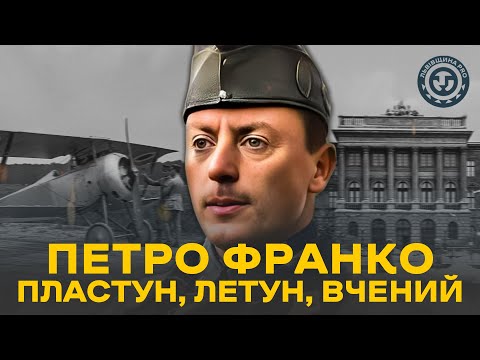
Петро Франко: засновник української військової авіації
Цікаво почитати
Леся. Мандрівний клубочок
336 грн
Докладніше
Яблука війни
336 грн
Докладніше
Пророк чи єретик? Релігійний світогляд Івана Франка та його взаємини з духовенством
520 грн
Докладніше
Пророк у своїй Вітчизні. Франко та його спільнота (1856—1886)
850 грн
Докладніше
Цитаделя: Львівський мілітарний альманах № 9
240 грн
Докладніше
Цитаделя: Львівський мілітарний альманах № 12
240 грн
Докладніше
Цитаделя: Львівський мілітарний альманах № 13
240 грн
Докладніше
Цитаделя: Львівський мілітарний альманах № 15
240 грн
Докладніше
Цитаделя: Львівський мілітарний альманах № 3
240 грн
Докладніше
Цитаделя: Львівський мілітарний альманах № 5
240 грн
Докладніше
Цитаделя: Львівський мілітарний альманах № 6
240 грн
Докладніше
Руки і сльози. Роман про Івана Франка
490 грн
Докладніше
Станиславів: віднайдені історії
240 грн
Докладніше
Історія. UA: постаті, факти, версії
485 грн
Докладніше
Михайло Коцюбинський – дітям
217 грн
Докладніше
Іван Франко – дітям
217 грн
Докладніше
Визначні діячі українського походження : Державні та релігійні діячі, політики, військові
825 грн
Докладніше