

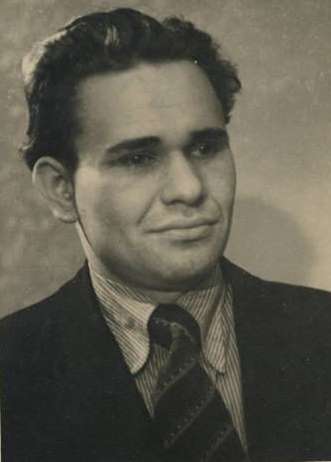
- Діяльність: Література, Правозахисна діяльність
- Дата народження: 19 грудня 1920 року
- Дата смерті: 1 квітня 2004 року, Київ
- Навігатор: Повоєнний СРСР
Він був дитиною свого часу. Спізнав голод, сирітство, фронт, захоплення і розчарування сталінізмом, а під кінець життя — радянські табори як покарання особливо небезпечному вільнодумцю, що став одним із засновників Української Гельсінської групи.
Він був дитиною свого часу. Спізнав голод, сирітство, фронт, захоплення і розчарування сталінізмом, а під кінець життя — радянські табори як покарання особливо небезпечному вільнодумцю, що став одним із засновників Української Гельсінської групи.
На поклик Долі
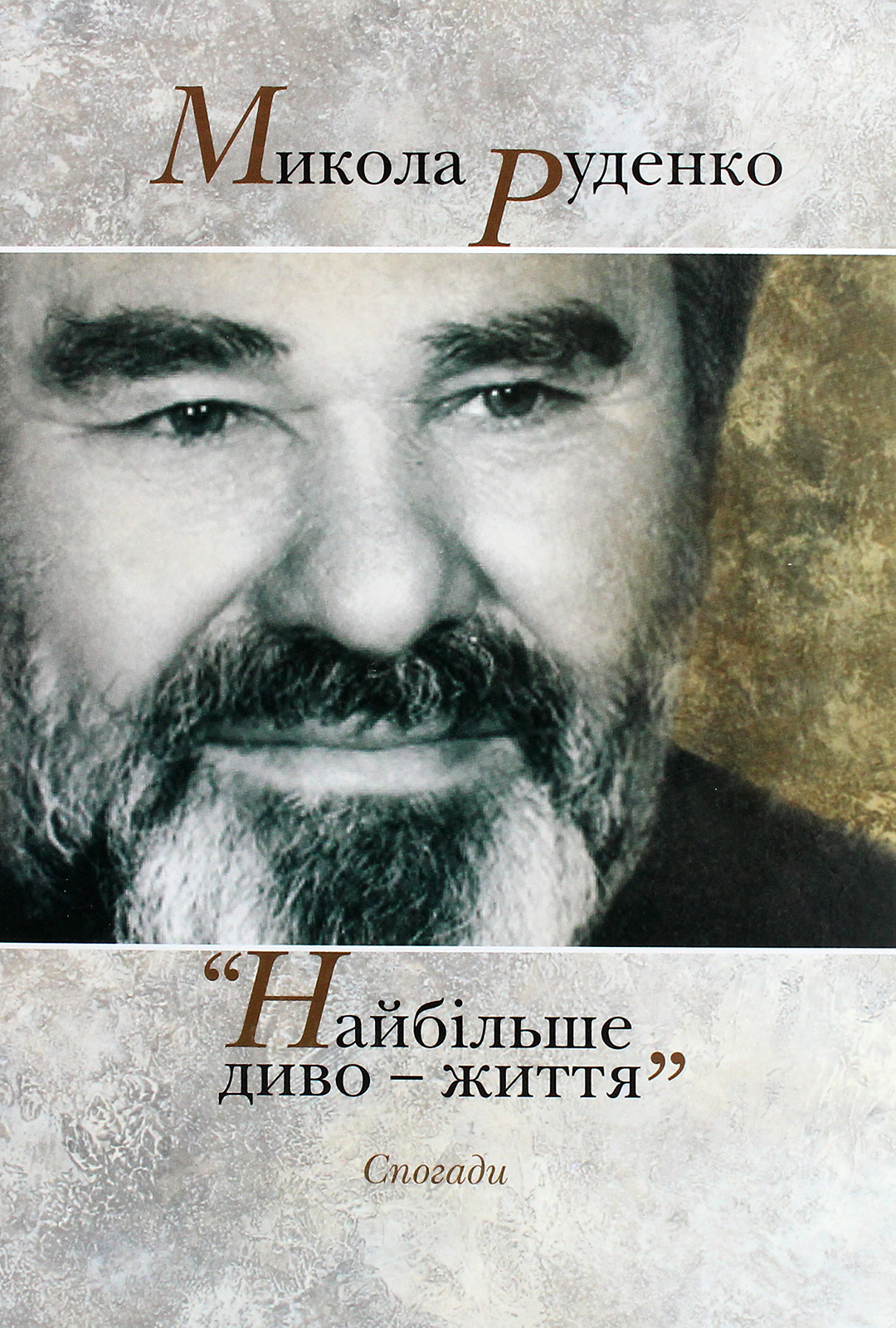
«Людина починається не з дати свого народження — вона починається з народження власної пам’яті», — напише пізніше Микола Руденко у книзі спогадів «Найбільше диво — життя».
Народився він 19 грудня 1920 року в селі Юр’ївка на Луганщині. Батько його був шахтарем, у вільний час вичиняв шкіри для виготовлення чобіт, від чого в пам’яті Миколки лишився стійкий дух від чанів. Ще один яскравий спогад — війни з кавунами, які він, випробовуючи дитячі сили, підкочував до краю крейдяної кручі і спускав униз, спостерігаючи, як вони вибухали, розбризкуючи довкола червону серцевину. Чи дорога, якою він бігав зустрічати батька з роботи, чекаючи гостинця «від зайчика». На жаль, це тривало недовго: коли Миколі було шість років, батько загинув на шахті. У комірчині, де сиділи шахтарі, загорілася бензинка, і хтось, щоб уникнути вибуху, схопив її й жбурнув у відчинені двері. Саме в цю мить крізь них заходив Данило Руденко.
А через рік Миколу спіткала іще одна біда: під час дитячих баталій йому камінцем підбили ліве око, яке на довгий час осліпло.
Дитинство Миколи Руденка пройшло під знаком «нового життя». Він запам’ятав і перші розкуркулення, і колгоспи, куди довелося здати коня, корову і пару волів, і голод 1933-го. На все життя лишилася в пам’яті глиняна хатка-мазанка, яку збудувала мама, і пальто, яке вона перешила зі шматків шинельного сукна й мундирного бостону.
Чесність і принциповість були властиві Миколі вже з юності. Він відмовився від «привілеїв», які давала йому дружба з сином секретаря райкому Митрофанова (той вимагав від Руденка написати замість нього твір українською мовою). Не доніс в НКВС на свого друга, хоча й знав, що він записує і зберігає спогади про Голодомор на Полтавщині. На шкільних зборах посмів виступити проти директора школи.
Покоління з фронтової шинелі
Писати вірші Микола Руденко почав іще у школі. Навіть послав на конкурс й отримав стипендію від Наркомату освіти. Це, а також сприяння Леоніда Первомайського, допомогли йому вступити у 1939 році на філологічний факультет Київського університету імені Шевченка. Провчитися вдалося всього два місяці — указом від 1939 року всіх юнаків, яким виповнилося 18 років, було мобілізовано до армії. Хлопець міг спокійно відсидітися, адже медкомісія одразу виявила його сліпоту і комісувала. Але він рвався на фронт і таки добився свого. У кавалерійському полку в нього теж була можливість лишитися полковим писарем, однак він пройшов через найважчі випробування і зрештою став видатним кавалеристом і зрештою навіть брав участь у парадах на Червоній площі. «Якби не пройшов військового, а відтак окопного загартування — не повернувся б із концтаборів, як не повернулися мої побратими Василь Стус чи Олекса Тихий», — напише він пізніше у своїх спогадах.
4 жовтня 1941 року в перших же боях під Ленінградом Руденко був тяжко поранений розривною кулею в поперек. Лікарі навіть не сподівалися, що він зможе ходити. Зміг, виживши у блокадному Ленінграді, потім був політруком прифронтового госпіталю. З війни повернувся з орденами Червоної зірки, Вітчизняної війни І ступеня та шістьма медалями.
Із таким послужним списком та добіркою віршів «З походу» 1946 року юнака прийняли до Спілки письменників. На письменників «покоління фронтової шинелі», як їх тоді називали, партійне керівництво одразу поклало великі надії, протиставивши їх маститим, але «неблагонадійним» Рильському, Яновському, Малишку. У перший рік Руденко таки виконав «почесне доручення» від Кагановича і «затаврував ганьбою буржуазного націоналіста Рильського». Однак порозуміння з владою тривало недовго.
«Руденко-дисидент народився 1949 року, коли він, учорашній політрук, зміг сказати категоричне “ні” беріївському приятелю Олександру Корнійчуку. Руденко мав необережність заступитись за вислану в Казахстан авторку роману “Людолови” Зінаїду Тулуб», — писав журналіст Вахтанг Кіпіані у статті «Остання шабля Слова і Честі…». А за кілька місяців Микола відмовився підтримати кампанію винищення єврейської інтелігенції й написати негативні характеристики на «безродних космополітів» — письменників єврейського походження Риву Балясну, Матвія Талалаєвського, Григорія Полянкера, Леоніда Первомайського та інших. Декого це врятувало, дехто все одно пішов етапом. Від 1950 року Руденко іде з посад, добровільно відмовляючись таким чином від усіх привілеїв радянського істеблішменту. Утім, партійні ідеаль для нього все ще важливі: «Довго я залишався з глибокою вірою у велику справу комуністичної партії, був вірним сталінцем, багато написав присвячених вождю віршів, була навіть поема про Сталіна», — скаже він у 1996 році в розмові з «літописцем дисидентського руху» Василем Овсієнком.
Певне прозріння прийшло після ХХ з’їзду КПРС та розвінчання культу особи Сталіна. Руденко почав по-новому штудіювати «Капітал» Маркса і виклав свої інтерпретації у філософських працях «Економічні монологи» та «Енергія прогресу», а згодом у романі «Формула Сонця». Руденко написав лист Хрущову, критикуючи партійну систему, виступав на відкритих зборах. Довго таке вільнодумство тривати не могло: у 1974 році Руденка виключили з КПРС, через рік — із СПУ. Щоби прожити, він мусив продати машину, дачу і влаштуватися нічним сторожем.
«Не по лжі»
Пошуки справедливості привели Миколу Руденка до правозахисної організації «Міжнародна амністія» і до контактів із російськими дисидентами. 18 квітня 1975 року його вперше арештували за правову діяльність, але ще під час слідства у зв’язку з 30-літтям Перемоги амністували як учасника війни. Щоб «заспокоїти» правдошукача, його примусово піддали психіатричній експертизі (тоді це був звичний спосіб боротьби з інакодумцями), і лише порядність лікарів порятувала 65-літнього Руденка від запроторення в «психіатричку».
9 листопада 1976 року на квартирі Андрія Сахарова в Москві Руденко провів прес-конференцію для іноземних журналістів, де оголосив про створення Української Гельсінської групи (УГГ). До неї також увійшли генерал Петро Григоренко, Оксана Мешко, Олесь Бердник, Левко Лук’яненко, Олекса Тихий, Микола Матусевич, Мирослав Мартинович, Ніна Строката. Того ж вечора квартира Руденка на другому поверсі в Пущі-Водиці під Києвом була закидана цеглою. Так КДБ «відсалютував» на честь створення УГГ. Невдовзі були опубліковані її Декларація і Меморандум № 1, у розділі «Типові порушення прав людини» були дані про голод 1933 року, про репресії 1930-х років, знищення УПА, репресії проти шістдесятників, список політичних таборів і українських політв’язнів.
Відповідь системи була негайною. 23–24 грудня 1976 у Руденка провели обшук, під час якого «знайшли» підкинуті кагебістами 39 доларів США. Вирок — сім років таборів суворого режиму та п’ять років заслання. Публіцистичні статті, художні твори, усні висловлювання Руденка кваліфікували як наклепницькі, з книгарень та бібліотек вилучили книги його авторства.
Але і в таборі Руденко лишився невпокореним.
Спочатку як інваліда війни другої групи Руденка не залучали до тяжкої фізичної праці. Але після того як він на побаченні передав на волю через дружину Раїсу свої вірші, його з Мордовії у вересні 1981 етапували в село Кучино Чусовського району Пермської області (саме тут загинуть Олекса Тихий і Василь Стус). За участь у страйках в’язнів, зривання нашивок із прізвищем, відмову від роботи Руденка часто кидали у штрафний ізолятор, а тоді, змінивши групу інвалідності з другої на третю, адміністрація послала його на тяжку роботу. Начальник табору при цьому кинув: «Ви втратили право називатися інвалідом війни 2-ї групи».
Раїсу Руденко теж ув’язнили, засудивши за участь в УГГ до 5 років таборів суворого режиму. І коли їх обох звільнили в грудні 1987-го, виявилося, що повертатися нікуди: квартира конфіскована, роботи немає. Руденки добилися дозволу виїхати до Німеччини, а звідти — до США, де Микола Данилович працював на радіостанціях «Свобода» і «Голос Америки», очолював зарубіжне представництво УГГ, потім Української Гельсінської спілки.
1988 року Філадельфійський освітньо-науковий центр визнав Руденка «Українцем року» – за непохитну стійкість в обороні національних прав українського народу і його культури. Тоді ж його запросив на аудієнцію президент США Рональд Рейган.
У вересні 1990 року Руденки повернулися до Києва. Їх відновили у громадянстві й реабілітували. Микола Данилович працював над спогадами, але праве око остаточно перестало бачити, тому довелося записувати тексти на диктофон. Зате через пів року відкрилося ліве око, яке не бачило 63 роки.
Останні роки Микола Руденко мешкав у Києві, уникаючи високих трибун та пишних зібрань, намагаючись до кінця «жити не по лжі». Відійшов у вічність 1 квітня 2004 року. Коли дружина клопоталася за ліки та лікарів, він її м’яко зупиняв: то все суєта, не треба, прийшла і моя пора. А 3 жовтня 2020 року не стало й Раїси Руденко. Вона кілька місяців не дожила до відзначення 100-річчя Миколи Даниловича.
Джерело: Український інститут національної пам’яті.
Із когорти праведників: Микола Руденко
Mykola Rudenko
Activity: Literature, Human rights activity
Date of birth: December 19, 1920
Date of death: April 1, 2004, Kyiv
Navigator: Post-war USSR
He was a child of his time. He experienced hunger, orphanhood, the front line, infatuation and disappointment with Stalinism, and towards the end of his life — Soviet camps as a punishment for an especially dangerous freethinker who became one of the founders of the Ukrainian Helsinki Group.
At the call of Destiny
“A person begins not from the date of their birth — they begin with the birth of their own memory,” Mykola Rudenko would write later in his book of memoirs “The Greatest Miracle — Life.”
He was born on December 19, 1920, in the village of Yurivka in the Luhansk region. His father was a miner, and in his spare time, he tanned hides to make boots, which left a persistent spirit from the vats in Mykolka’s memory. Another vivid memory is the wars with watermelons, which he, testing his childish strength, would roll to the edge of a chalk cliff and let slide down, watching them explode, splashing the red core all around. Or the road along which he ran to meet his father from work, waiting for a treat “from the bunny.” Unfortunately, this did not last long: when Mykola was six years old, his father died in the mine. In the cubbyhole where the miners sat, a gasoline lamp caught fire, and someone, to avoid an explosion, grabbed it and threw it out the open door. It was at this exact moment that Danylo Rudenko was entering through it.
And a year later, another misfortune befell Mykola: during children’s battles, his left eye was struck by a stone, which went blind for a long time.
Mykola Rudenko’s childhood passed under the sign of the “new life.” He remembered both the first dekulakizations and the collective farms, where they had to hand over a horse, a cow, and a pair of oxen, and the famine of 1933. For his whole life, there remained in his memory a clay mud-brick hut that his mother built, and a coat that she resewed from pieces of overcoat cloth and uniform boston.
Honesty and adherence to principles were characteristic of Mykola already from his youth. He refused the “privileges” given to him by his friendship with the son of Mitrofanov, the secretary of the district committee (who demanded that Rudenko write an essay in the Ukrainian language instead of him). He did not report his friend to the NKVD, even though he knew that he was recording and keeping memories of the Holodomor in the Poltava region. At a school meeting, he dared to speak out against the school principal.
A generation from the front-line overcoat
Mykola Rudenko began writing poems back in school. He even sent them to a contest and received a scholarship from the Commissariat of Education. This, as well as the assistance of Leonid Pervomaiskyi, helped him enroll in 1939 in the Faculty of Philology of the Kyiv Shevchenko University. He managed to study for only two months — by a decree of 1939, all young men who had turned 18 were mobilized into the army. The boy could have safely sat it out, because the medical commission immediately discovered his blindness and discharged him. But he was eager to go to the front and eventually got his way. In the cavalry regiment, he also had an opportunity to remain a regiment clerk, but he went through the hardest trials and eventually became an outstanding cavalryman and in the end even participated in parades on Red Square. “If I had not gone through the military, and therefore trench tempering — I would not have returned from the concentration camps, as my brothers-in-arms Vasyl Stus or Oleksa Tykhyi did not return,” he would write later in his memoirs.
On October 4, 1941, in the very first battles near Leningrad, Rudenko was severely wounded by an explosive bullet in the lower back. The doctors did not even hope that he would be able to walk. He could, having survived in the besieged Leningrad, then he was a political instructor of a front-line hospital. He returned from the war with the Orders of the Red Star, of the Patriotic War of the 1st class, and six medals.
With such a track record and a collection of poems “From the March” of 1946, the young man was admitted to the Writers’ Union. The party leadership immediately placed great hopes on the writers of the “generation from the front-line overcoat,” as they were called then, contrasting them with the venerable but “unreliable” Rylskyi, Yanovskyi, Malyshko. In the first year, Rudenko did fulfill the “honorable assignment” from Kaganovich and “branded the bourgeois nationalist Rylskyi with shame.” However, the mutual understanding with the authorities did not last long.
“Rudenko the dissident was born in 1949, when he, yesterday’s political instructor, was able to say a categorical ‘no’ to Beria’s friend Oleksandr Korniychuk. Rudenko had the imprudence to stand up for Zinaida Tulub, the author of the novel ‘The Man-Catchers,’ who had been exiled to Kazakhstan,” wrote journalist Vakhtang Kipiani in the article “The Last Saber of Word and Honor…”. And a few months later, Mykola refused to support the campaign to exterminate the Jewish intelligentsia and to write negative evaluations of the “rootless cosmopolitans” — writers of Jewish origin Riva Balyasna, Matviy Talalaievskyi, Hryhoriy Polyanker, Leonid Pervomaiskyi, and others. It saved some, some still went by transport. From 1950, Rudenko left his positions, voluntarily renouncing in this way all the privileges of the Soviet establishment. However, party ideals were still important to him: “For a long time I remained with a deep faith in the great cause of the Communist Party, was a loyal Stalinist, wrote many poems dedicated to the leader, there was even a poem about Stalin,” he would say in 1996 in a conversation with the “chronicler of the dissident movement” Vasyl Ovsienko.
A certain enlightenment came after the XX Congress of the CPSU and the denunciation of the cult of personality of Stalin. Rudenko began to study Marx’s “Das Kapital” in a new way and outlined his interpretations in the philosophical works “Economic Monologues” and “The Energy of Progress,” and later in the novel “The Formula of the Sun.” Rudenko wrote a letter to Khrushchev, criticizing the party system, and spoke at open meetings. Such freethinking could not last long: in 1974, Rudenko was expelled from the CPSU, a year later — from the UWS (Ukrainian Writers’ Union). In order to survive, he had to sell his car, his dacha, and get a job as a night watchman.
“Live not by lies”
The searches for justice led Mykola Rudenko to the human rights organization “Amnesty International” and to contacts with Russian dissidents. On April 18, 1975, he was arrested for the first time for legal activity, but already during the investigation, in connection with the 30th anniversary of the Victory, he was amnestied as a war participant. To “calm down” the truth-seeker, he was forcibly subjected to a psychiatric examination (at that time, this was a common way of fighting dissenters), and only the decency of the doctors saved the 65-year-old Rudenko from being confined to a “psych ward.”
On November 9, 1976, at the apartment of Andrei Sakharov in Moscow, Rudenko held a press conference for foreign journalists, where he announced the creation of the Ukrainian Helsinki Group (UHG). It also included General Petro Grigorenko, Oksana Meshko, Oles Berdnyk, Levko Lukyanenko, Oleksa Tykhyi, Mykola Matusevych, Myroslav Marynovych, Nina Strokata. That same evening, Rudenko’s apartment on the second floor in Pushcha-Vodytsia near Kyiv was pelted with bricks. In this way, the KGB “saluted” in honor of the creation of the UHG. Soon, its Declaration and Memorandum No. 1 were published; in the section “Typical Violations of Human Rights,” there were data about the famine of 1933, about the repressions of the 1930s, the destruction of the UPA, repressions against the Sixties’ generation, a list of political camps and Ukrainian political prisoners.
The response of the system was immediate. On December 23–24, 1976, a search was conducted at Rudenko’s place, during which 39 US dollars planted by the KGB agents were “found.” The verdict was seven years of strict regime camps and five years of exile. Rudenko’s publicistic articles, fictional works, and oral statements were qualified as slanderous, and books authored by him were removed from bookstores and libraries.
But even in the camp, Rudenko remained unsubdued.
At first, as a war invalid of the second group, Rudenko was not involved in heavy physical labor. But after he passed his poems to freedom through his wife Raisa during a visit, he was transported from Mordovia in September 1981 to the village of Kuchino, Chusovoy district, Perm region (it is exactly here that Oleksa Tykhyi and Vasyl Stus would perish). For participating in prisoner strikes, tearing off name tags, and refusing to work, Rudenko was often thrown into a punishment isolation cell, and then, having changed his disability group from the second to the third, the administration sent him to heavy labor. The head of the camp dropped at this: “You have lost the right to be called a war invalid of the 2nd group.”
Raisa Rudenko was also imprisoned, being sentenced for participation in the UHG to 5 years of strict regime camps. And when they both were released in December 1987, it turned out that there was nowhere to return: the apartment was confiscated, there was no job. The Rudenkos obtained permission to leave for Germany, and from there — to the USA, where Mykola Danylovych worked at the radio stations “Freedom” and “Voice of America,” headed the foreign representation of the UHG, then of the Ukrainian Helsinki Association.
In 1988, the Philadelphia Educational and Scientific Center recognized Rudenko as the “Ukrainian of the Year” – for unwavering steadfastness in defense of the national rights of the Ukrainian people and its culture. At that time, he was invited to an audience by US President Ronald Reagan.
In September 1990, the Rudenkos returned to Kyiv. They were restored to citizenship and rehabilitated. Mykola Danylovych worked on his memoirs, but his right eye completely stopped seeing, so he had to record the texts on a dictaphone. On the other hand, half a year later, his left eye opened, which had not seen for 63 years.
The final years Mykola Rudenko lived in Kyiv, avoiding high rostrums and grand gatherings, trying to the end to “live not by lies.” He passed into eternity on April 1, 2004. When his wife was bustling about medicines and doctors, he would softly stop her: all that is vanity, no need, my time has come too. And on October 3, 2020, Raisa Rudenko passed away as well. She missed the celebration of the 100th anniversary of Mykola Danylovych by a few months.
Source: Ukrainian Institute of National Remembrance. From the cohort of the righteous: Mykola Rudenko
Пов’язані матеріали

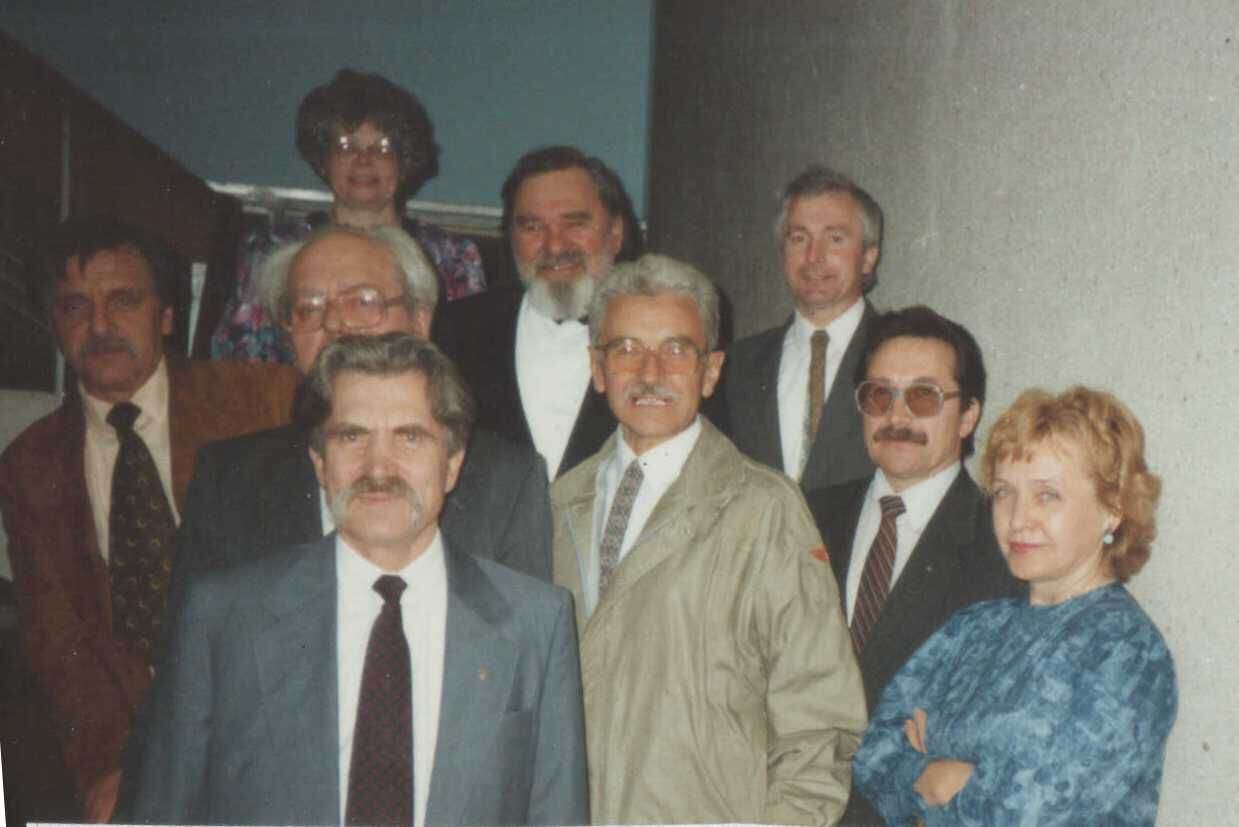
Микола Руденко, Левко Лук’яненко, Микола Горбаль, Євген Сверстюк, Валерія Сверстюк, Раїса Руденко, Василь Овсієнко, Олесь Шевченко. Будинок кіно в місті Києві 1996 року
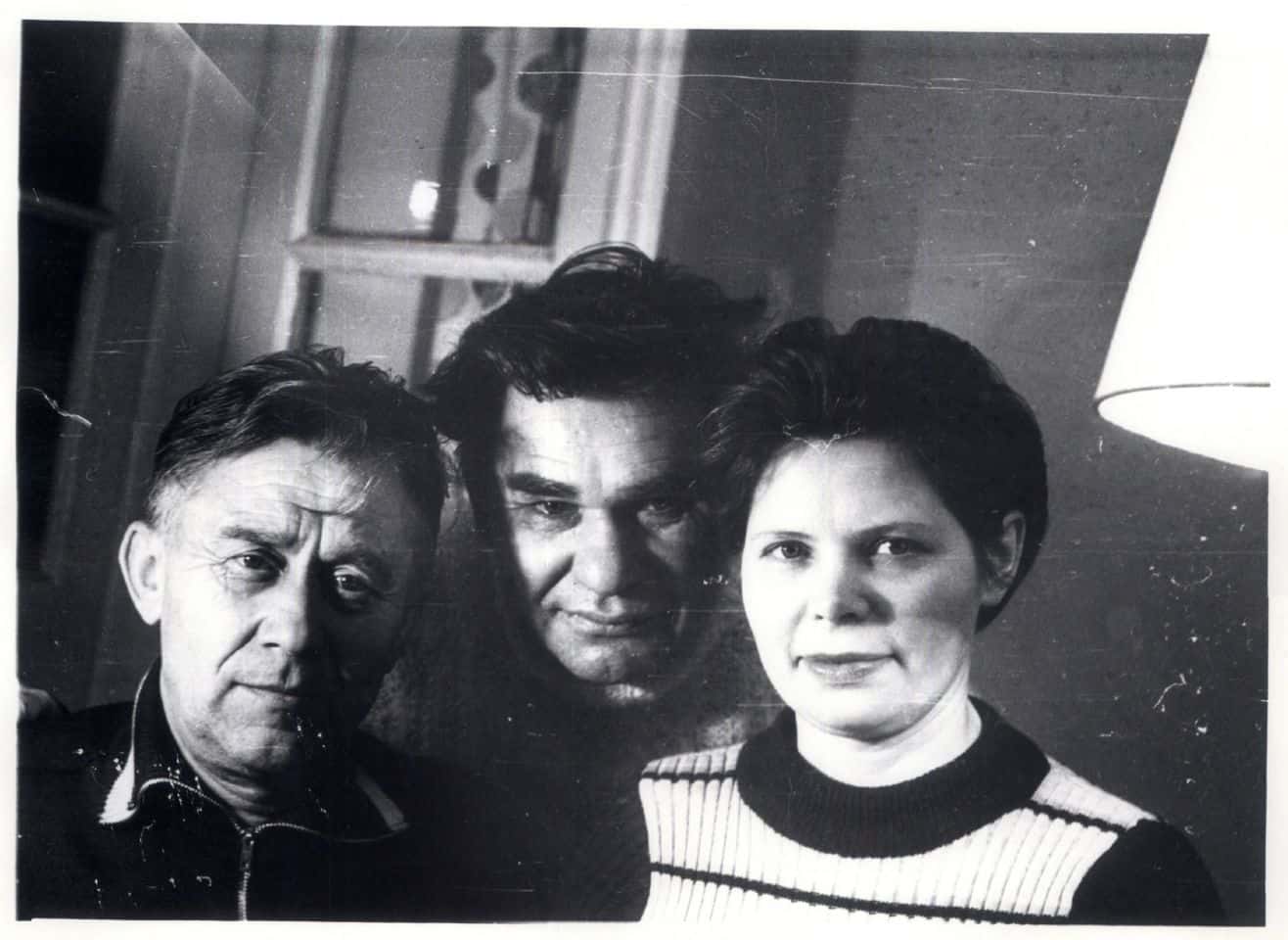
Микола Руденко із Раїсою Руденко, яка була неофіційною секретаркою УГГ. Фото Архів СБУ, оприлюднений електронним архівом визвольного руху
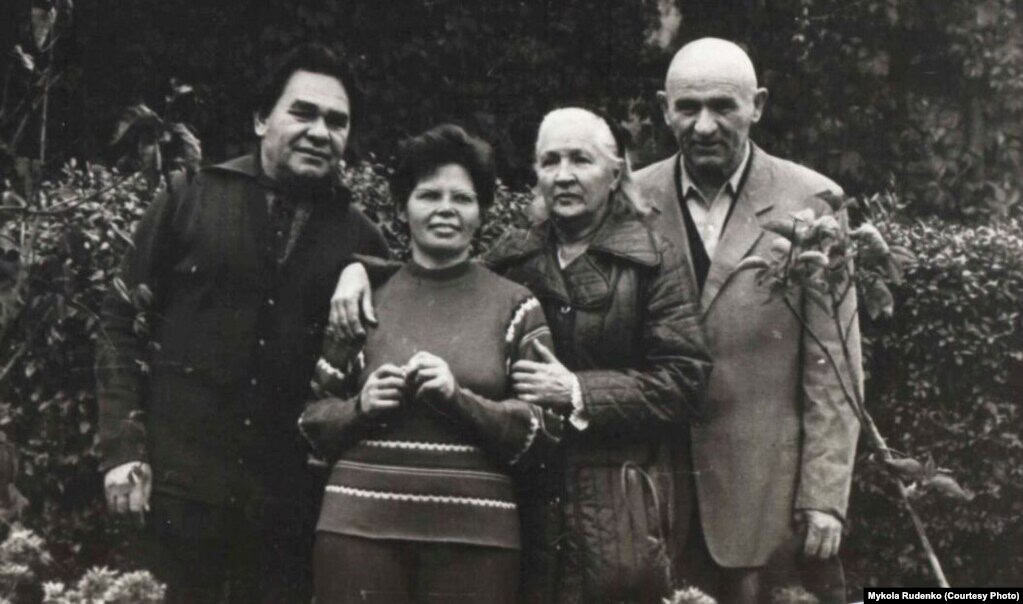
Микола Руденко, його дружина Раїса Руденко та Петро Григоренко з дружиною Зінаїдою. Київ, Конча-Заспа, вересень 1976 року
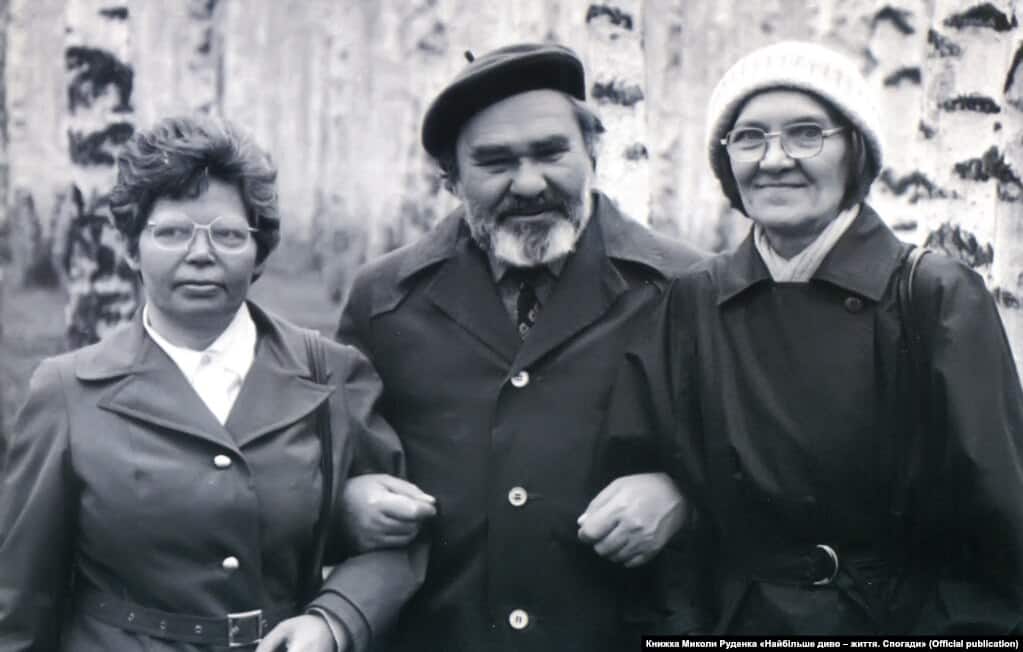
Раїса Руденко, Микола Руденко, Лідія Дороніна в селі Майма Горно-Алтайської області, де всі троє відбували заслання, 1987 року
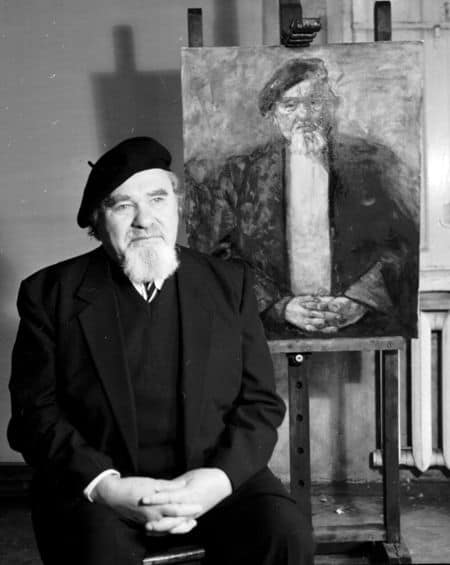
Микола Руденко, Герой України. Фото Архів СБУ, оприлюднений електронним архівом визвольного руху
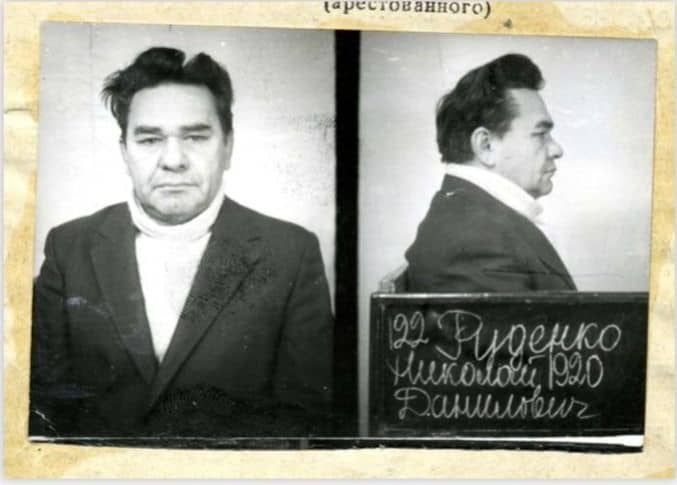
Арешт Миколи Руденка
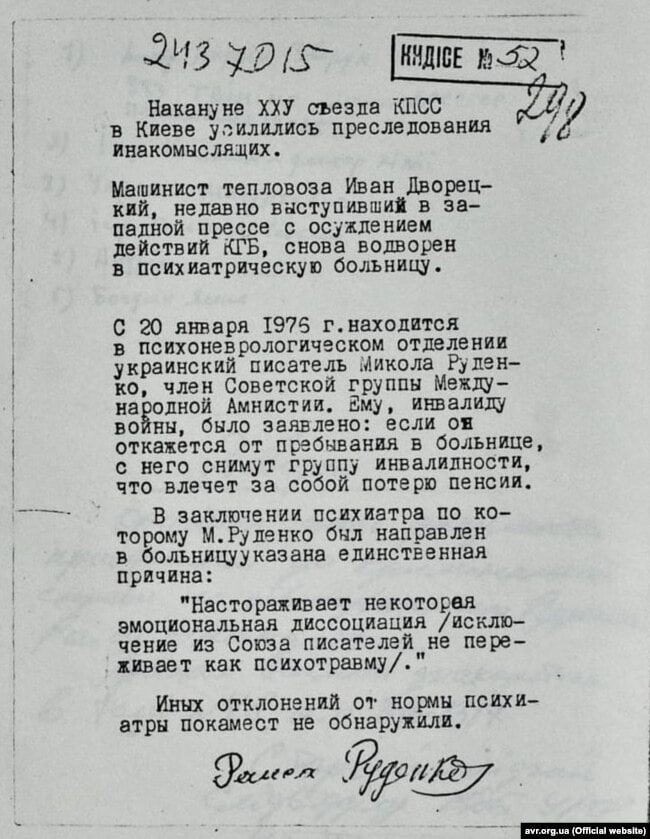
Нотатка Раїси Руденко про примусове психіатричне лікування її чоловіка Миколи Руденка
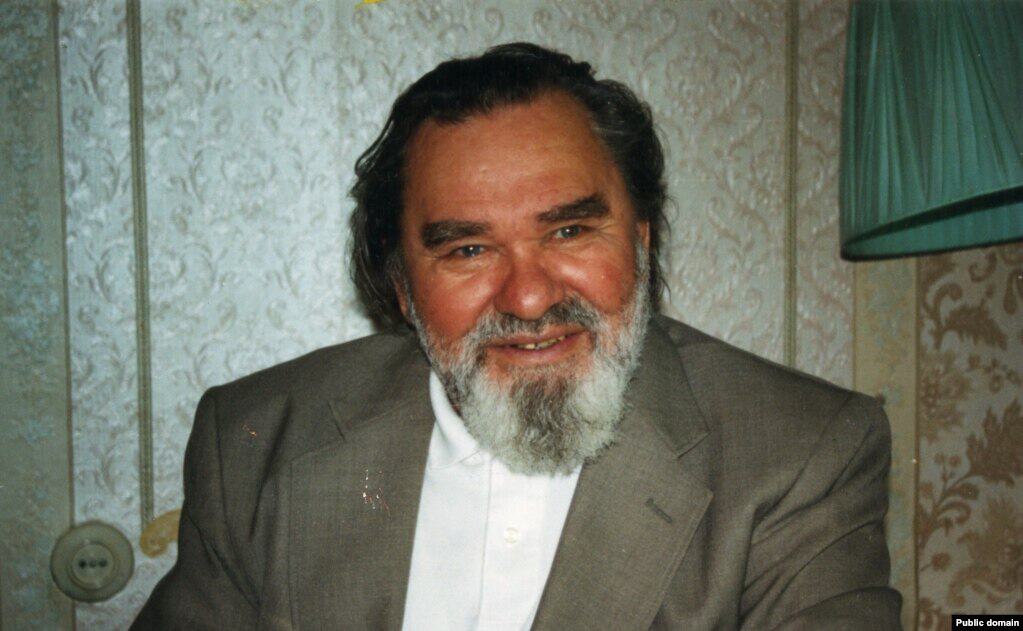
Микола Руденко, 1994 року
Відео
Українські дисиденти: Микола Руденко
Документальний цикл про політв’язнів. Микола Руденко
Цікаво почитати
Образи митрополита Андрея Шептицького в публіцистиці й історіографії української діаспори, 1944–1989
347 грн
Докладніше
Митрополит Андрей Шептицький і нацистський режим. 1941–1944. Між християнськими ідеалами і політичними реаліями
462 грн
Докладніше
Дух Христа є духом демократичним (Митрополит Андрей Шептицький)
404 грн
Докладніше
Бандера. Портрет на тлі епохи. Перша спроба наукової біографії (м)
315 грн
Докладніше
Два пасинки митрополита
635 грн
Докладніше
Станиславів: віднайдені історії
255 грн
Докладніше
Історія. UA: постаті, факти, версії
485 грн
Докладніше
Любомир Гузар. Спогади (подарункове)
1800 грн
Докладніше
Любомир Гузар. Спогади
650 грн
Докладніше